Concerns on the New Liturgy
Articles by SSPX USA and SSPX General House
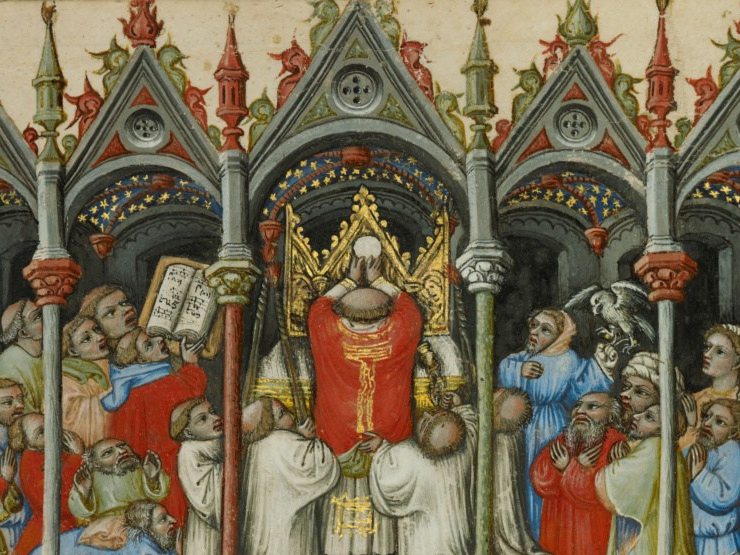
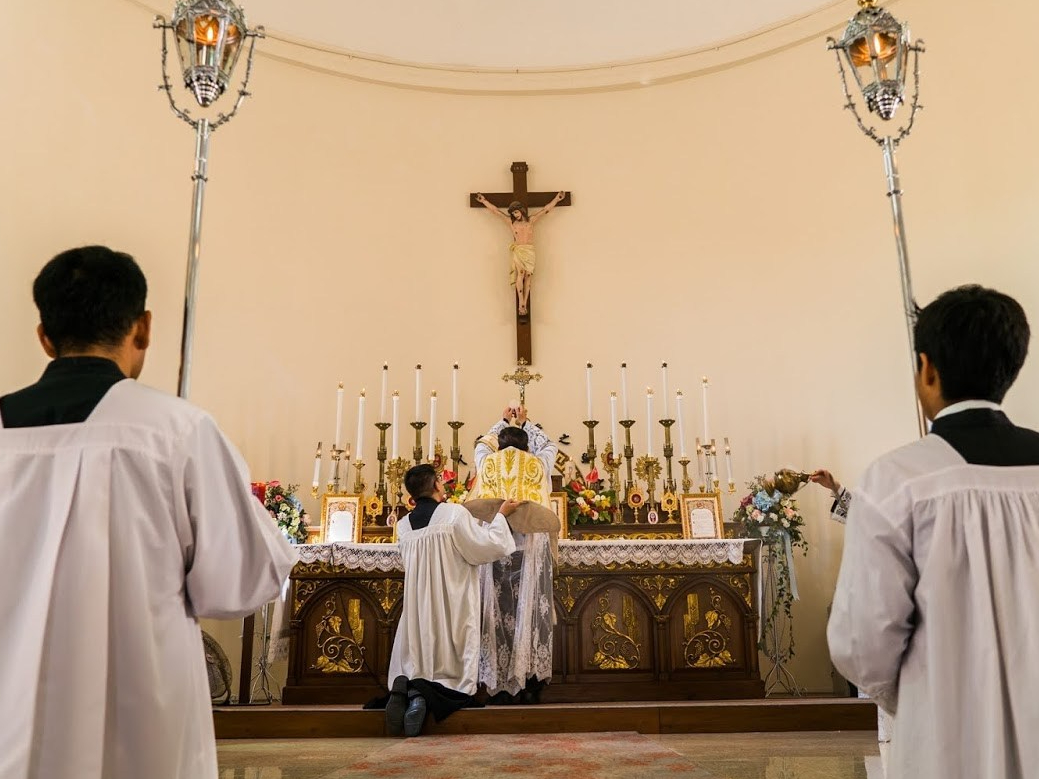
The Holy Sacrifice of the Mass is much more than a simple rite to which we are attached, as many unbelievers reproach us. Holy Mass is our life because Jesus Christ is our life!
Fr Davide Pagliarani, Superior General
The Catholic Faith is manifested through the Church’s official prayers, the liturgy, of which the Mass is the most perfect expression. Since Vatican II the nature of the Mass has been significantly altered by a new rite. One of the most controversial issues within the Catholic Church today is the question of the New Mass or Novus Ordo Missae. This Novus Ordo Missae, or new way of saying Mass, was introduced in 1969 by Pope Paul VI.
Our evaluation of the Novus Ordo Missae repeats the basic arguments of the Short Critical Study (also known as “The Ottaviani Intervention”) presented to Paul VI by Cardinals Ottaviani and Bacci. We note that the new rite “represents, both as a whole and in its details, a striking departure” from the Catholic definition of the Mass, considered in its four causes:
- material cause (the Real Presence),
- formal cause (its sacrificial nature),
- final cause (its propitiatory purpose)
- and efficient cause (the priesthood of the priest).
This serious shortcoming prevents us from regarding this new rite as legitimate and even allows us to doubt the validity of the celebrations in more than one instance. Masses celebrated in conformity with the Novus Ordo are not only less good than those celebrated according to the traditional Ordo of St. Pius V; they are bad, because of the “departure” noted above.

In the questionnaire dated January 11-12, 1979, to the question posed by the Sacred Congregation for the Doctrine of the Faith:
Do you maintain that a faithful Catholic can think and affirm that a sacramental rite, in particular the rite of the Mass, approved and promulgated by the Supreme Pontiff may be not in conformity with the Catholic Faith or favens haeresim [promoting heresy]?”,
Archbishop Lefebvre answered:
In itself this rite does not profess the Catholic Faith as clearly as the old Ordo Missae did and consequently it may promote heresy. But I do not know to whom it should be attributed, nor whether the pope is responsible for it. What is astonishing is that an Ordo Missae smacking of Protestantism and therefore favens haeresim could have been issued by the Roman Curia.”[1]
The Mass is a rite, in other words, a set of signs (gestures and words), each of which, though necessary, is not sufficient and must converge with all the other in order to assert doctrine. We object to the new rite, not for explicitly denying some point of doctrine, as a heretical proposition might do, but for having altered the set of all the signs that make up the rite, in such a way that it no longer asserts doctrine as adequately as it did in the past.
For example, in order to express adoration for the Real Presence, why were the 14 genuflections reduced to only 3? Within the context of a sacramental right, the eloquence of a sign or symbol is achieved by way of an adequate multiplication of gestures. On this symbolic level, the reduction of the number of genuflections within the context of the New Mass is tantamount to an omission, which obliterates the expression of the doctrine. All the more so because these 3 genuflections, at the places where they have been retained (2 after the elevation and no longer before it; 1 before the Communion of the faithful) present an equivocal meaning: it is no longer clear whether they express the real Eucharistic Presence in the strict sense, or the spiritual and mystical presence of Christ in the assembly, which is the result of the belief of the faithful.
All through this rite we criticize omissions by diminishment, which end up obscuring the expression of the Catholic Faith. Even though they may have recalled one or another point of the traditional doctrine, the subsequent Magisterial explanations (the Catechism of the Catholic Church [1992], the encyclical Ecclesia de eucharistia [2003], the Compendium of Catechism of the Catholic Church [2005], the post-synodal exhortation Sacramentum caritatis [2007]) could not be considered valid arguments justifying the New Mass, because despite everything it remains such as it is, as a rite signifying something, with its profound defects.
The codification of the rite of the Mass carried out by St. Pius V had had as its result the highlighting of those aspects of the Catholic Faith that were denied by the Protestant heresy but had already been made explicit by Tradition. The liturgical reform carried out by Paul VI had as its result the obscuring of those same aspects. The Missal of Paul VI therefore was not an improvement on the Missal of St. Pius V. It departed from it, in the sense in which it made obscure and ambiguous what the Missal of St. Pius V had clarified and made explicit. And if someone objects that the liturgical reform of Paul VI intended to clarify other aspects that had been left in obscurity until now, we reply that a new clarification cannot call into question a clarification already made.
The New Mass therefore is not good, inasmuch as it has been deprived of the clarifications necessary for a complete expression of the Catholic Faith. By reason of this intrinsic deficiency, it could not possibly be the object of a law which as such obliged the whole Church. Indeed, the purpose of liturgical law is to propose authoritatively the common good of the Church and everything required for it. Since it is the privation of that good, the New Mass of Paul VI could not be the object of a [liturgical] law; it is not only bad but also illegitimate, despite all the appearances of legality with which it has been and is still surrounded.
Focus on Man
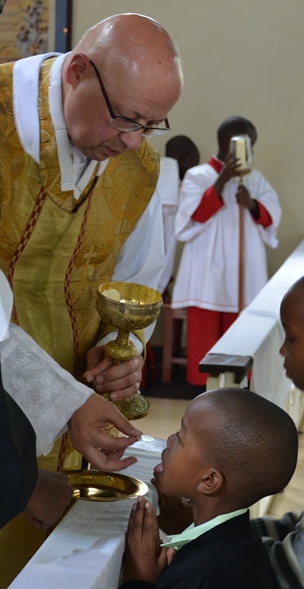
In the new rite, man has become more of the focus, not so much God. The priest and faithful gather for a meal to share with one another Christ’s loving presence. This desire for man-centered liturgy has produced noticeable changes: using vernacular languages, introducing “Mass facing the people” and equating the laity’s role with that of the priest. Even the Blessed Sacrament has been removed from the visible center in the church and is now often reserved away from the main altar and out of view. Also many abuses have been introduced, such as lay Eucharistic Ministers, Communion in the hand, and altar girls. Even Vatican II’s instruction that Gregorian chant should be given “pride of place” is ignored.
The consequences of these changes have been, among many others, a shocking reduction in the number of religious vocations and a decrease in weekly attendance at Mass. Sacramental confession, as an important preparation before receiving the Eucharist, has also steadily declined.
Focus on God
“[The reformed Mass] lays heavy emphasis upon the aspect of taking part in a banquet, much less on the idea of sacrifice.” Theologian Jean Guitton, a close confidante of Pope Paul VI, 19 December 1993 Radio Courtoise
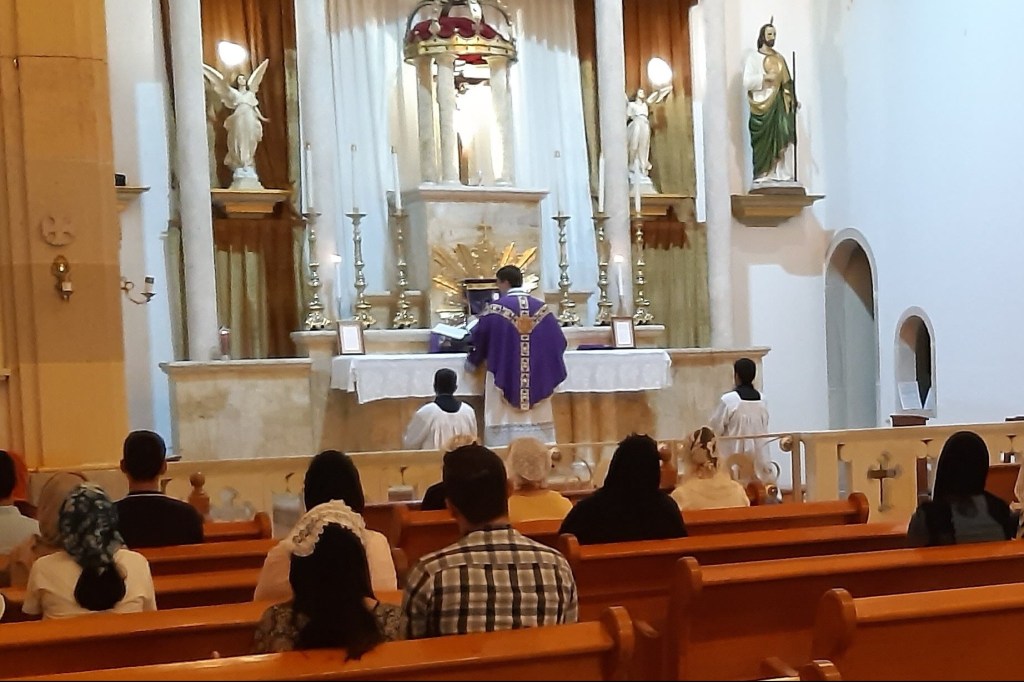
The traditional Mass, on the contrary, focuses on the worship of God and the true sacrificial nature of the Mass. The Catholic Church teaches that Jesus Christ, through the priest, offers His Body and Blood to His Father in atonement for all the sins of humanity; Holy Communion is a consequence of this sacrifice and allows men to receive the effects of the sacrifice of reparation. The use of a sacred language such as Latin for the worship of God, the many signs of respect and adoration to show our loving submission to Him, the unique role of the ordained priest who takes the place of Christ at the altar, a reverent and humble reception of Holy Communion kneeling with the host placed on the tongue, the awe-inspiring sacred chants are all indicative of how the Mass directs us to God.
Return to Tradition
A return to the traditional form of the liturgy has consistently produced an increase in vocations, a better attendance at Sunday and even at daily Mass, a more frequent use of the sacrament of penance, and overall a heightened awareness of the sacred, sacrificial nature of the liturgy. The traditional Mass and all of the doctrine that it conveys is the means for a true restoration of all things in Christ.
[1] “Mgr Lefebvre et le St. Office”, Itineraires 233 (May 1979): 146-147.
For further reading:
- Cardinals Ottaviani and Bacci, A Short Critical Study of the New Order of Mass [“The Ottaviani Intervention”].
- Society of St. Pius X, The Problem of the Liturgical Reform: A Theological and Liturgical Study (Kansas City, MO: Angelus Press, 2001).
- La Messe en question. Actes du Ve Congres theologique de SiSiNoNo, Paris, 12-13-14 avril 2002 (Courrier de Rome, 2002).
- “Mgr Lefebvre et le St. Office”, Itineraires 233 (May 1979): pp. 146-147.
- Fr. Gregoire Celier, La Dimension oecumenique de la reforme liturgique (Fideliter, 1987).
- Archbishop Marcel Lefebvre, The Mass of All Time, edited by Fr. Patrick Troadec (Kansas City, MO: Angelus Press, 2008).
- Louis Salleron, La Nouvelle Messe (Itineraires, 19762).
- Arnaldo Xavier da Silveira, La Nouvelle messe de Paul VI: qu’en penser? (Chire-en-Montreuil: Diffusion de la Pensee Francaise, 1975).
 Priory of Saint Pius X, Singapore